ServicesHardscape Cleaning
Hardscape Cleaning in Niskayuna
We clean driveways, walkways, patios and steps with a contained rotary cleaner and the right detergent for each material. You get a cleaner surface and better footing, without etched concrete, washed-out paver joints or overspray on your siding and plants.
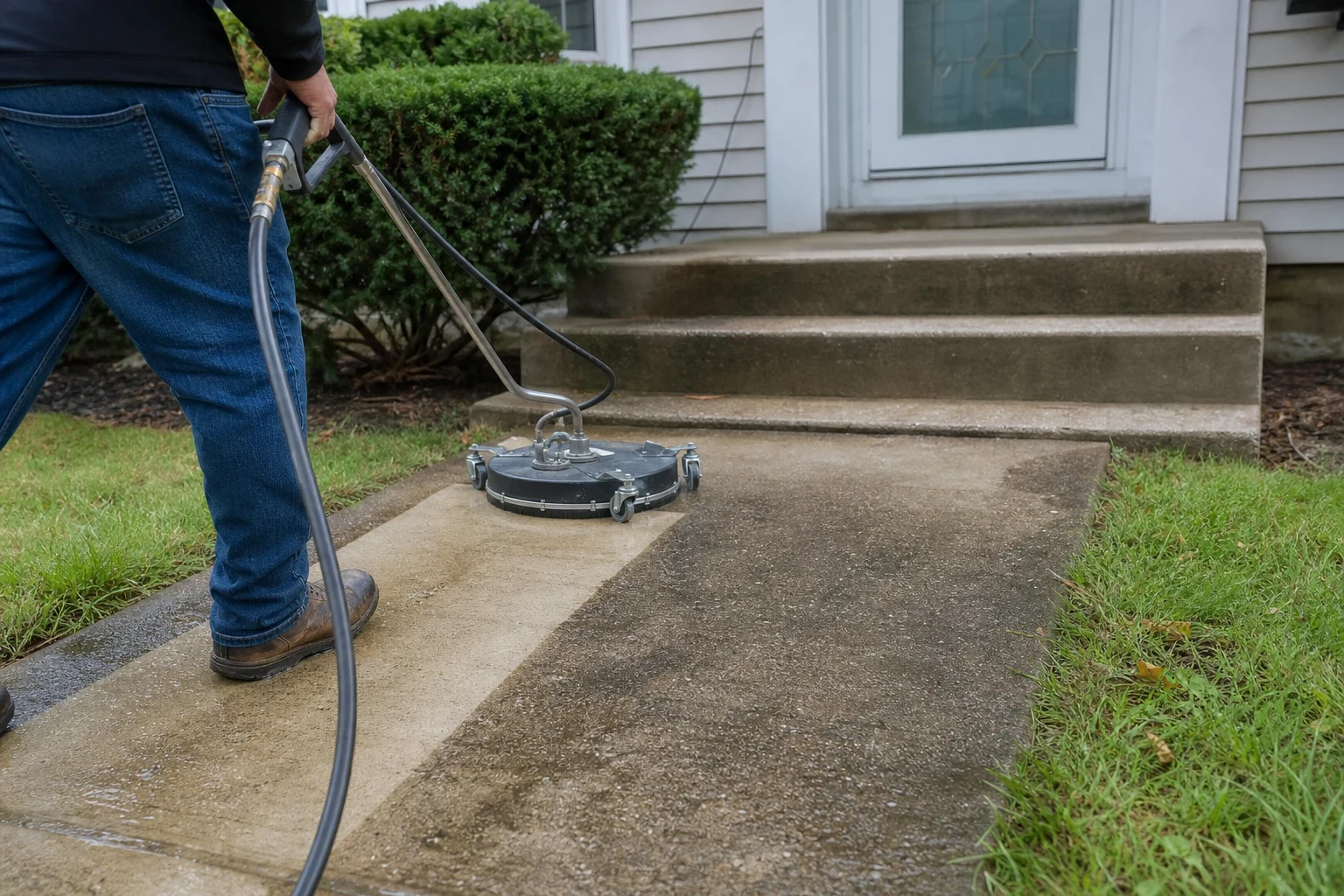
Cleaner hardscape, safer footing
Concrete and pavers around a home collect more than dirt. Algae and moss grow in shaded, damp spots, and that green film is slick underfoot, especially on steps and the walk to the front door. Road salt, oil drips, fertilizer rust and tannin stains from fallen leaves also settle into the pores of the surface over a few seasons.
Our hardscape cleaning uses a spinning bar inside a hooded deck, so the water stays pointed down at the surface instead of spraying across your yard. We match pressure and detergent to the material. Broom-finished concrete, stamped and sealed concrete, interlocking pavers, bluestone and brick each handle water differently. Too much pressure scars concrete and blows the sand out of paver joints, so we work below that line.
The company is licensed and insured, with 5 years in business behind it. Both count for something when a crew is running pressurized equipment and long hose lines around your home exterior.
What a hardscape cleaning visit includes
Pre-treatment of organic growth
We apply a mild cleaning solution to algae, moss and mildew and let it dwell before any rinsing. Breaking the growth down chemically means we need less pressure to lift it, which protects the surface.
Contained rotary cleaning
The hooded rotary deck passes over flat areas in overlapping rows. Because the spray is enclosed, grit and debris stay on the ground instead of hitting windows, cars or people nearby, and the finish comes out even, without the stripes a hand wand leaves.
Steps, edges and corners by hand
The rotary deck cannot reach riser faces, step nosings or the strip against the foundation. We detail those with a wide fan tip held at a low angle.
Stain spot treatment
Oil, rust and leaf tannin each need a different chemistry. We tell you during the quote which stains should lift fully and which will only lighten.
Protection for plants and fixtures
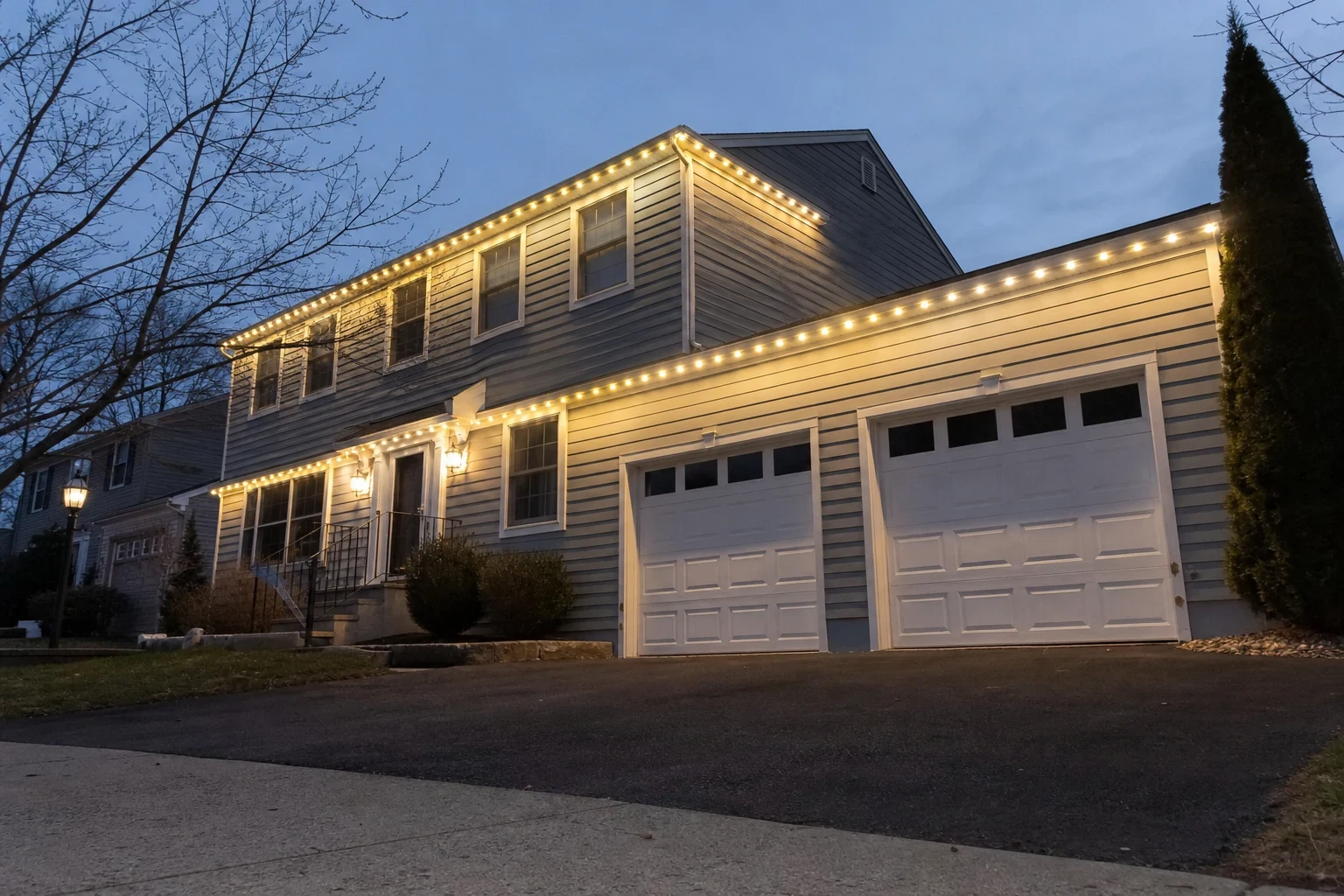
We pre-wet and rinse garden beds and lawn edges, cover low-voltage path lights and outdoor outlets, and keep spray off door sills and window screens. Permanent lighting along the roofline stays well outside our work zone.
Final rinse and walk-through
We flush detergent residue off the surface and away from beds, then walk the area with you before we pack up.
Signs your walks and driveway need cleaning
- Green or black film in shady spots
- Algae grows where the sun rarely reaches, like north-facing walks and under trees. It turns slippery as soon as it gets wet, and it is worst in spring and fall.
- Steps that feel slick
- If you or a guest has slid on the front steps after rain, the problem is usually organic growth in the pores of the concrete. Cleaning restores the grip of the original finish.
- Moss and weeds in paver joints
- Growth in the joints holds moisture against the pavers and pushes them out of level over time, which creates trip edges.
- White crust after winter
- Leftover de-icing salt keeps drawing moisture into concrete. Through repeated freeze-thaw cycles that speeds up spalling, where the top layer flakes away.
- Dark stains where cars park
- Oil and coolant drips soak in deeper the longer they sit. Treating them early gives the best result.
How the job day runs
- 1
Free quote by phone
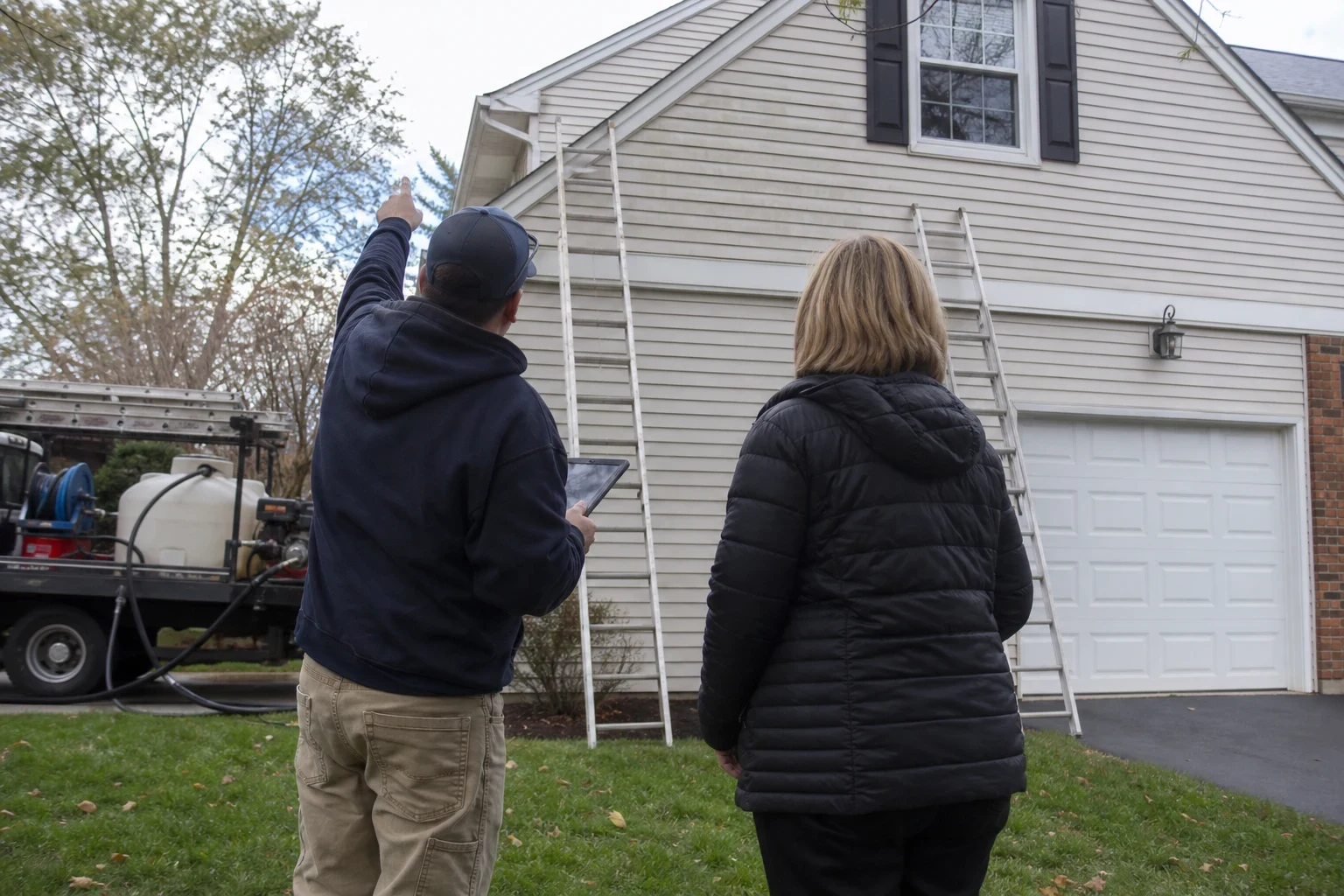
You describe the areas and any problem spots, and we look at the surface before quoting. We note the material, any sealer and existing cracks or loose pavers so nothing is blamed on the cleaning later.
- 2
Set up and protect
We connect to an outdoor spigot, route hoses along edges where nobody will trip on them, cover fixtures and outlets, and wet down nearby plants. We ask that kids and pets stay inside while we work.
- 3
Pre-treat, then clean
Growth gets its dwell time first. Then the rotary cleaner handles the flat areas at controlled pressure, and we hand-detail steps and edges.
- 4
Rinse and review
We rinse residue toward the lawn or drain, not into beds, and walk the surface with you. In dry, mild weather concrete usually dries within a few hours.
What affects the price of hardscape cleaning
Square footage is the starting point, but it does not set the price on its own. Your quote is written out line by line, so the driveway, the steps and any stain work each show up separately. These are the things that move the number.
- Area and layout
- One open driveway cleans faster than the same footage split into narrow walks, curves and small landings.
- Material and its condition
- Sealed stamped concrete, older concrete with a worn surface and dry-laid pavers all need lower pressure and more careful passes.
- Growth and stains
- Heavy moss, years of algae or several types of stain mean more pre-treatment and dwell time.
- Steps and detail work
- Stair risers, retaining wall caps and edges along the foundation are hand work and take longer per foot.
- Access and water
- A spigot close to the work area keeps setup simple. Long hose runs or tight side yards add time.
Hardscape cleaning questions
- Will cleaning damage my concrete or pavers?
- Not when the pressure and tip are right for the material. Most damage comes from a narrow nozzle held too close, which cuts lines into concrete. Our hooded rotary cleaner spreads the force evenly and keeps a fixed distance from the surface.
- Will the sand wash out of my paver joints?
- We keep pressure low over pavers to leave joint sand in place. If joints were already empty or the polymeric sand had failed before we arrived, we point it out during the walk-through so you know what you are looking at.
- Is the cleaning solution safe around kids, pets and plants?
- We mix products at their labeled dilution, wet plants before and after, and rinse residue away from beds. Kids and pets should stay off the area until we finish the final rinse.
- How long will the surface stay clean?
- That depends mostly on shade and moisture. Sunny driveways stay clean much longer than a shaded walk under trees, where algae returns sooner. We will tell you which areas on your property are likely to grow back first.
- When is the best time of year?
- Spring, after salt season, and early fall both work well. We do not clean when temperatures are near freezing, because water left in the pores can freeze and damage the surface.
- Does someone have to stay at the house while you work?
- No, most of the work happens outside without you. Before we arrive, please make sure an outdoor spigot is turned on and park cars on the street or in the garage. It helps if you can step out once the final rinse is done, so we can look at the cleaned surfaces with you and answer any questions.
Get your quote for cleaner, safer walkways
Tell us which surfaces need attention and where people have slipped. We will look, explain what will come clean, and give you a free quote by phone.